Content Automation: A Smarter Way to Scale Your Digital Output
 Written by Brendan Byrne
| Tuesday, December 2, 2025
Written by Brendan Byrne
| Tuesday, December 2, 2025
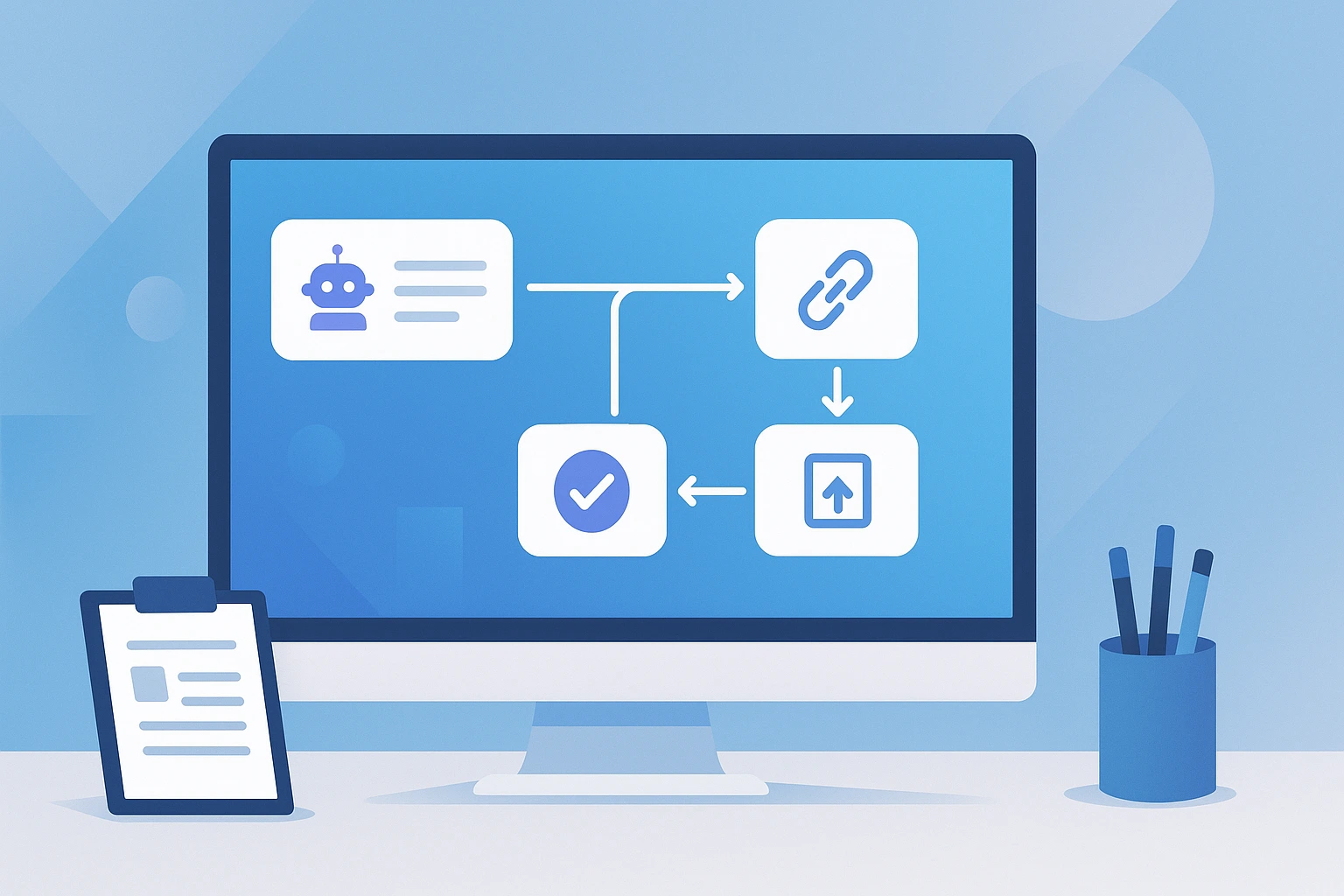
Content Automation: A Smarter Way to Scale Your Digital Output
In today’s digital landscape, brands are expected to publish more content than ever. Blogs, landing pages, product descriptions, email sequences, social captions, video scripts, and SEO assets are no longer “nice to have”—they’re essential. The challenge is no longer why to create content, but how to produce it consistently without stretching your team or budget thin.
This is where content automation has become one of the most transformative capabilities for modern businesses. With AI-powered workflows, integrated systems, and intelligent publishing tools, content automation enables organisations to scale output while maintaining quality, brand consistency, and strategic intent.
Below, we explore how content automation works, the benefits it brings, and the technologies that make it possible—especially AI-driven workflows, auto-linking, and smart content deployment.
Why Content Automation Matters More Than Ever
Content demand has grown exponentially. Consumers expect brands to be active across multiple platforms, publish consistently, and provide helpful, relevant information at every stage of the customer journey.
The problem? Traditional content creation processes are slow, manual, and resource-heavy. They often involve:
- Countless drafts
- Manual SEO optimisation
- Repetitive formatting
- Hand-built internal linking
- Uploading and scheduling across various systems
- Endless stakeholder reviews
This becomes overwhelming, especially for lean teams or businesses trying to scale quickly. Content automation addresses these issues head-on by transforming the way teams plan, create, optimise, and publish content.
AI-Driven Workflows: The Engine Behind Scalable Content Production
At the heart of modern content automation is AI. But not the one-size-fits-all approach of the past—today’s AI workflows are customisable, integrated, and built to replicate human reasoning.
1. Automated Content Briefs
AI can instantly generate SEO-optimised content briefs, including:
- Keyword clusters
- Competitor insights
- Content outlines
- Recommended headings
- Internal linking suggestions
- Tone and style requirements
This stage alone saves hours normally spent on manual research.
2. Multi-format Content Generation
Using AI, you can generate variations for:
- Blogs
- Social posts
- Meta descriptions
- Paid ads
- Email sequences
- Product descriptions
- Long-form guides
Instead of creating each asset from scratch, AI produces a first draft aligned with brand voice and objectives—allowing humans to step in for refinement rather than creation.
3. Intelligent Editing & Consistency Checks
AI-driven tools now support:
- Grammar and spelling checks using Australian English
- Style and tone alignment
- Factual consistency checking
- Duplicate content detection
- Readability optimisation
This ensures content is not only polished, but consistent across all touchpoints.
4. Automated Quality Control
Instead of dragging content through multi-step manual approvals, AI can enforce rules such as:
- Minimum word count
- SEO scoring thresholds
- Brand-voice compliance
- Structural requirements
- Mandatory internal links
Only once the content meets all rules does it move to final review.
With AI at the core, workflows become predictable, scalable, and significantly faster.
Scaling Content Production Without Scaling Headcount
One of the biggest advantages of content automation is its ability to multiply output without proportionally increasing costs.
Automation enables teams to:
- Create more content in less time
- Repurpose content across multiple platforms
- Standardise processes without micromanagement
- Maintain consistent quality across all pieces
- Reduce dependency on multiple contractors or agencies
- Keep internal teams focused on strategy, not administration
For example, a blog can automatically trigger:
- Social snippets
- Email teasers
- Short-form video outlines
- Internal link updates
- SEO metadata
- Scheduled publishing
Traditionally, each of these steps required a different person or team. With automation, one content piece becomes a network of assets—without the extra workload.
Auto-Linking: The SEO Advantage That Saves Hours
Internal linking is one of the most powerful yet time-consuming SEO tasks. It affects ranking, crawling, and content discoverability, but manually identifying opportunities is tedious.
Auto-linking solves this problem by automatically:
- Scanning your entire website
- Identifying keyword matches
- Providing context-relevant link suggestions
- Adding links at scale
- Ensuring anchor-text diversity
- Updating links when content changes
This guarantees stronger site structure and better SEO performance with minimal manual intervention.
Smart linking also reduces human errors such as broken links, duplicated anchor phrases, or missed optimisation opportunities. It ensures every piece of content contributes to your broader strategy.
Smart Content Deployment: Streamlining the Publishing Process
Creating content is one thing—publishing it across systems is another. Smart deployment automates the final stage of the content lifecycle.
Key capabilities include:
- One-click publishing to CMS platforms
- Automatic scheduling based on engagement data
- Auto-generation of meta titles and descriptions
- Content tagging and categorisation
- Automatic image optimisation and compression
- Distributing content to social platforms
- Updating older content with new internal links
- Integrating with CRM and email systems
This means fewer bottlenecks, faster publishing cycles, and more opportunities for your content to drive traffic and conversions.
Many businesses waste time simply moving content around. Smart deployment removes that friction so teams can stay focused on strategy.
How Content Automation Supports Digital Growth
Content automation is not simply about convenience—it’s a competitive advantage.
Key benefits include:
- Faster time to market for campaigns
- Reduced operational costs and fewer bottlenecks
- Higher publishing frequency, improving SEO and brand visibility
- Consistent quality and tone across all assets
- Better team productivity and morale
- Data-driven optimisation through automated analytics
- More strategic use of human creativity and insight
Businesses embracing automation are outperforming those relying solely on manual workflows.
Supporting the Solutions on This Page
If your organisation is exploring content automation for the first time—or looking to refine an existing system—the tools showcased on this page are designed to support every stage of your content lifecycle. From smart generation to automated linking and seamless deployment, these solutions help you scale intelligently.
To learn more about how our content automation tools integrate with your existing systems, visit our Content Automation Hub:
Final Thoughts
Content automation is no longer just a technological upgrade—it’s an operational necessity for modern brands. By combining AI-driven workflows, auto-linking, and smart deployment, businesses can scale their content output while lowering costs and strengthening brand consistency.
As digital demands grow, embracing these tools will help your organisation stay ahead, improve efficiency, and ensure your message reaches the right audience at the right time.


